How 3D Printing Allows Unmatched Geometrical Freedom
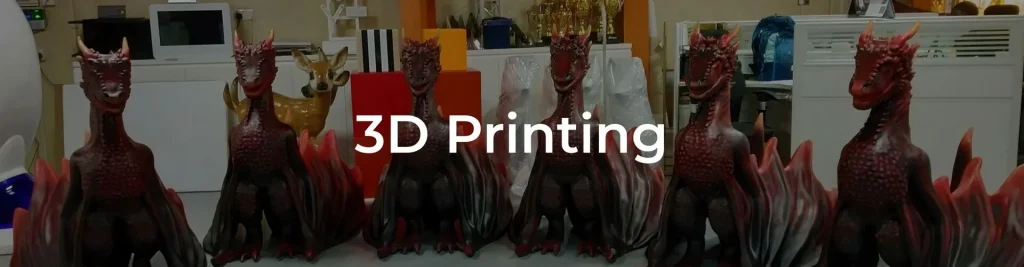
Some designs look impossible to manufacture using traditional methods. Intricate curves, hollow structures, organic forms, and highly detailed components can all present serious production challenges. 3D printing changes those limitations by building objects layer by layer, giving designers far greater freedom to experiment with complex geometries.
Here’s what this freedom can mean for ambitious designs and how 3D printing in Riyadh is making them possible.
Digital models unlock complex forms
Geometrical freedom begins inside computer-aided design software. Designers build unusual contours, organic curves, interlocking parts, hollow chambers, and repeating patterns within a digital environment.
Measurements remain adjustable before production starts, allowing creators to test several versions without cutting physical material each time. Digital modeling also supports precise symmetry, controlled asymmetry, and detailed surface structures.
Intricate structures become practical
Industrial printers handle geometries that prove difficult with conventional fabrication. A model may include internal channels, lattice frameworks, curved intersections, or enclosed cavities. Since the printer follows digital instructions layer by layer, these features remain part of one coordinated production process.
Designers gain room to explore structures that require numerous pieces, joints, or specialized tools through manual fabrication.
Material placement becomes precise
3D printing gives designers control over material distribution within selected models. Internal infill patterns can reduce weight while maintaining suitable structural performance. Wall thickness can vary across a component according to its function.
This control supports lightweight architectural pieces, artistic forms, prototypes, and engineering models requiring specific combinations of strength, flexibility, and weight.
Custom geometry suits each project
Traditional production methods may favor standard dimensions because tools and molds limit available forms. Digital fabrication removes many restrictions. Designers can produce one unusual object, modify its dimensions, and print another version using the revised file.
This flexibility suits custom sculptures, bespoke installations, specialized components, and experimental concepts where every measurement follows the project brief.
Large scale designs gain freedom
Large printed structures can be divided into manageable sections and later assembled into a complete piece. This method supports expansive sculptures, architectural features, exhibition elements, and public installations.
Designers can introduce sweeping curves, dramatic angles, layered surfaces, and hollow interiors without relying entirely on solid blocks. Each section follows the same digital reference, helping the complete structure maintain visual consistency.